Work / Brands / John West
We sold the meal, not the tin.
A recipe-led print, retail and out-of-home campaign that turns a store-cupboard staple into food people look forward to, across West Africa.
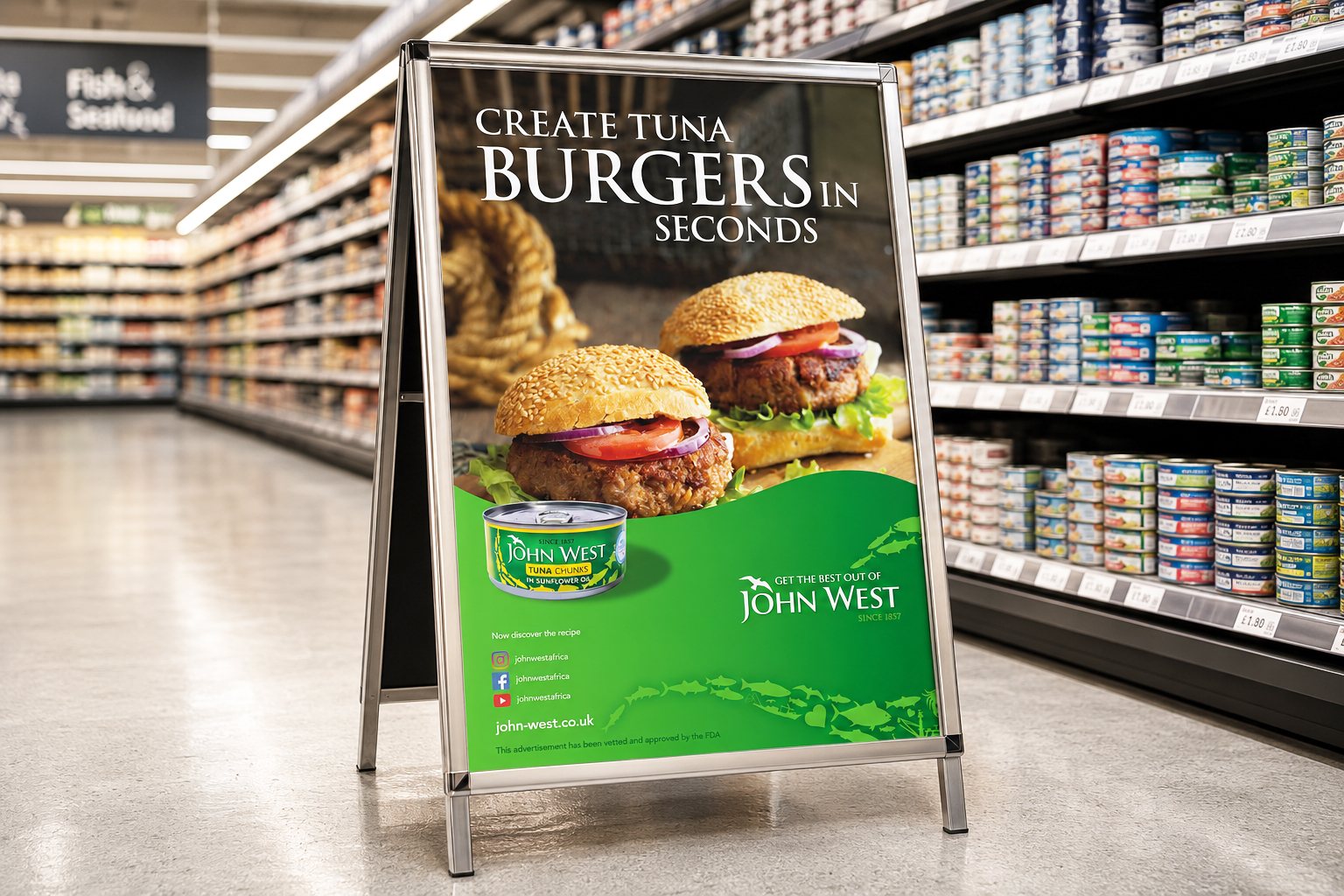
A famous product people buy on autopilot — and rarely give a second thought.
John West is one of the most recognised tuna brands in the world, trading on heritage since 1857. But canned tuna has a perception problem heritage doesn't solve: people treat it as a functional pantry item, not a food they look forward to. It sits on the shelf, it gets bought on autopilot.
For the African market, John West wanted to grow how often people reached for the tin — not by discounting it, but by changing what the tin means. The challenge: make a familiar, low-involvement product feel like an ingredient worth cooking with.
We stopped selling the can and started selling the meal.
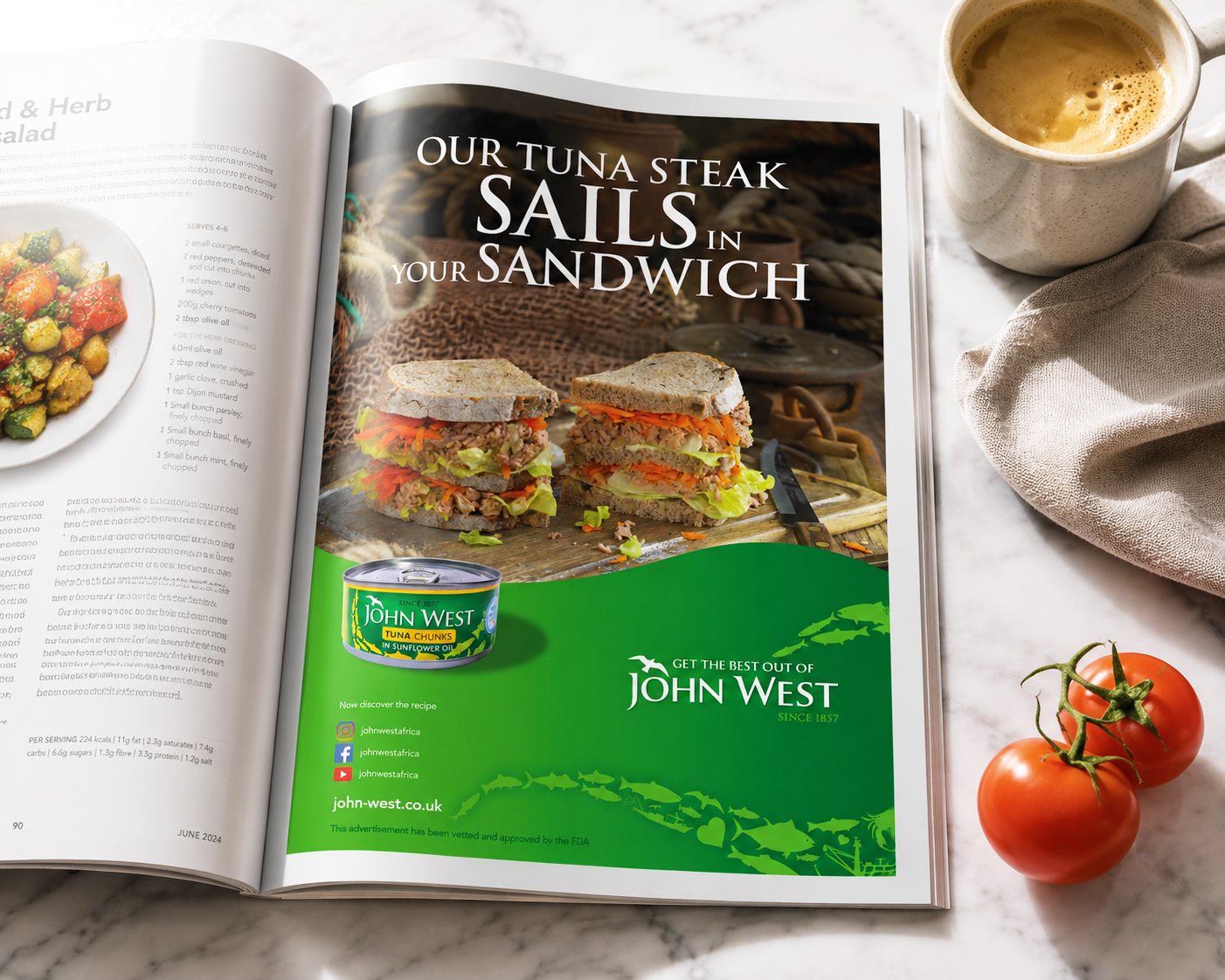
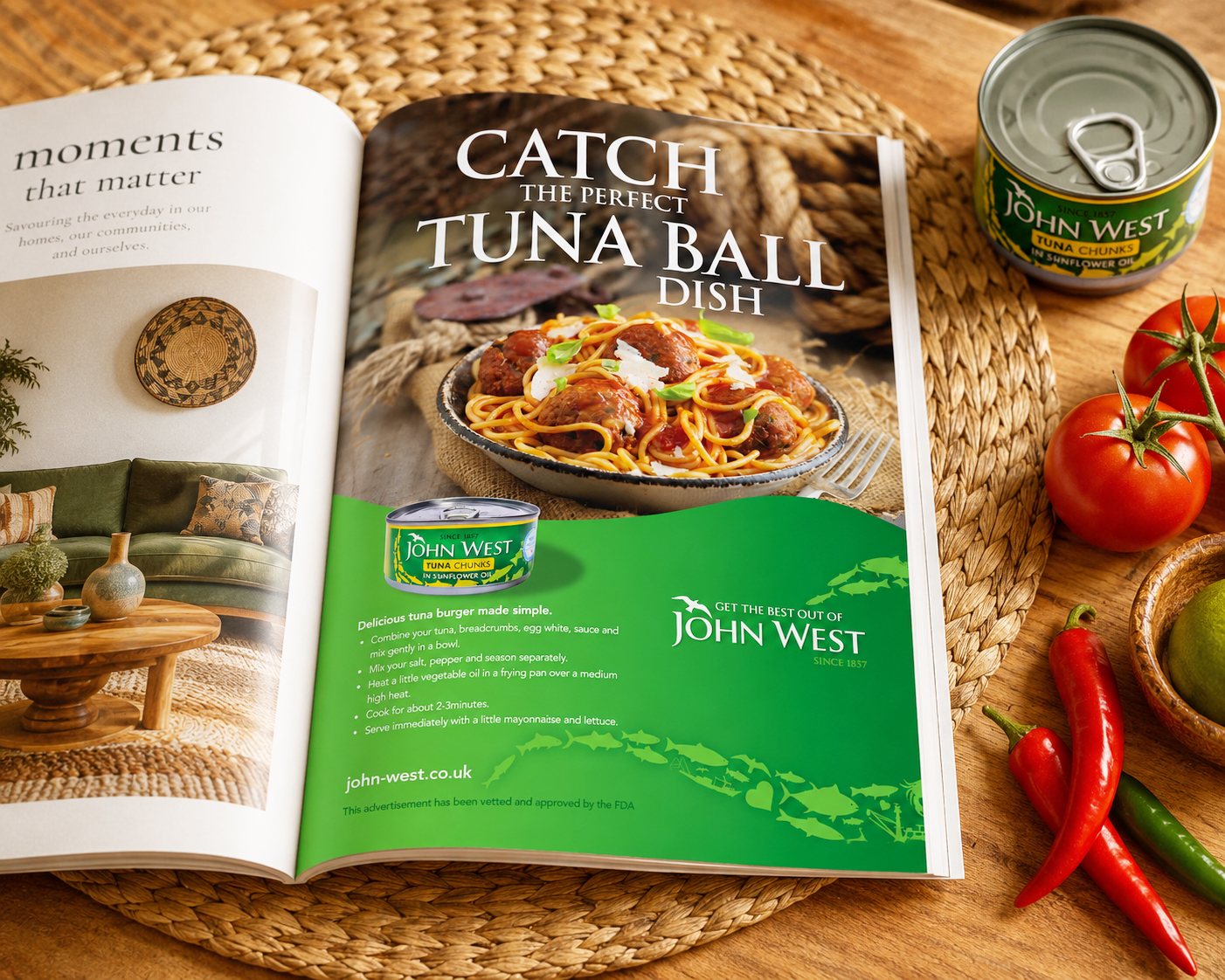
Every execution leads with a finished, appetising dish — a tuna burger, a stacked sandwich, a bowl of "tuna ball" spaghetti — shot like restaurant food, not like a label. The tin appears small, in support. The headline promises the outcome, not the product: Create Tuna Burgers in Seconds. Our Tuna Steak Sails in Your Sandwich. The recipe is the payoff, printed right there on the ad.
Two decisions held it together. We leaned into the brand's maritime heritage as a tone of voice — playful nautical wordplay ("sails", "catch") makes a 168-year-old brand feel warm rather than dusty. And we kept every layout to one system — dish on top, green brand wave below, tin, recipe, socials — so a run of very different meals still reads instantly as one campaign.
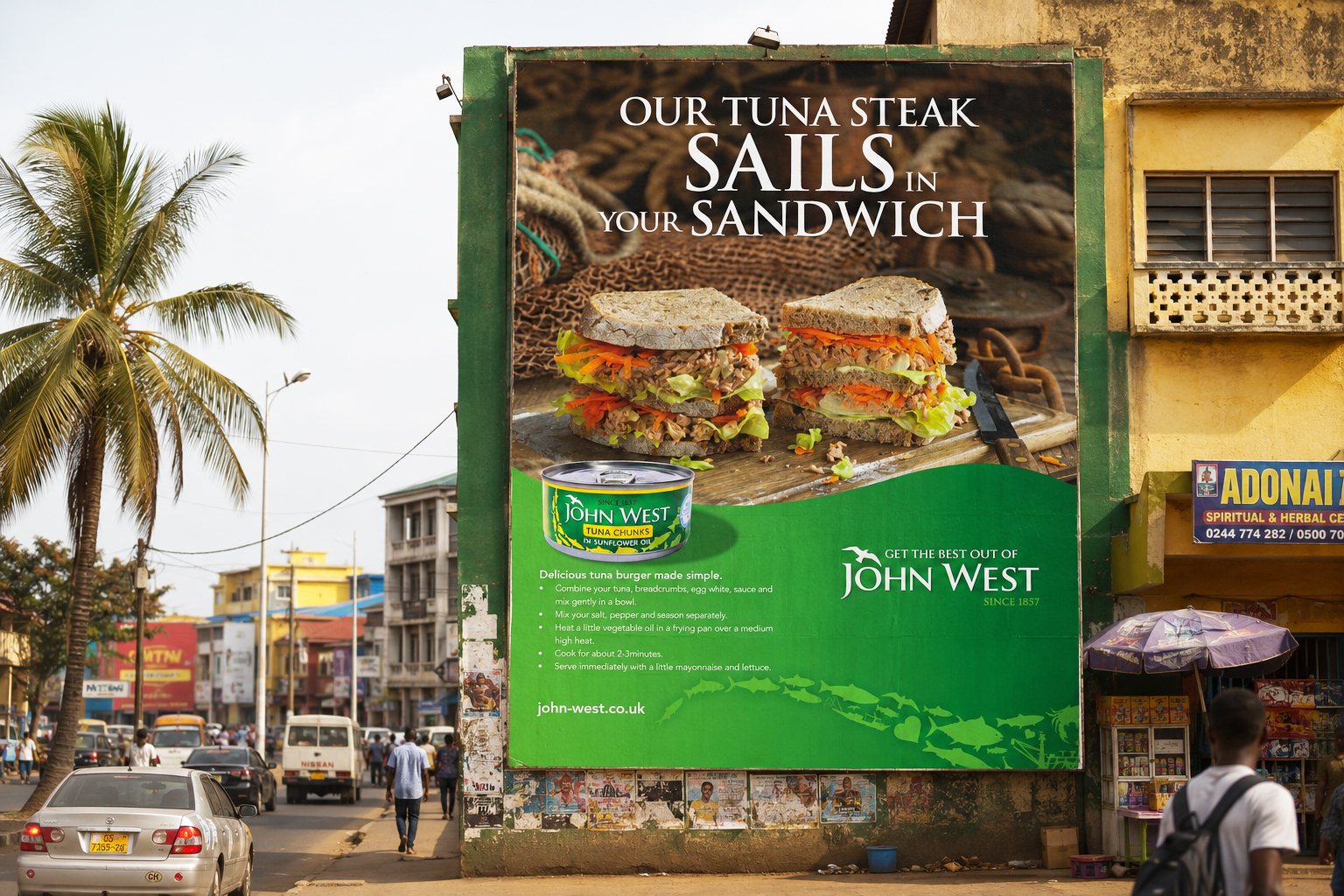
Content, not interruption
Placed in a recipe context, the ad reads as content. The finished dish does the selling; the recipe on the page makes the promise ("in seconds") immediately believable.
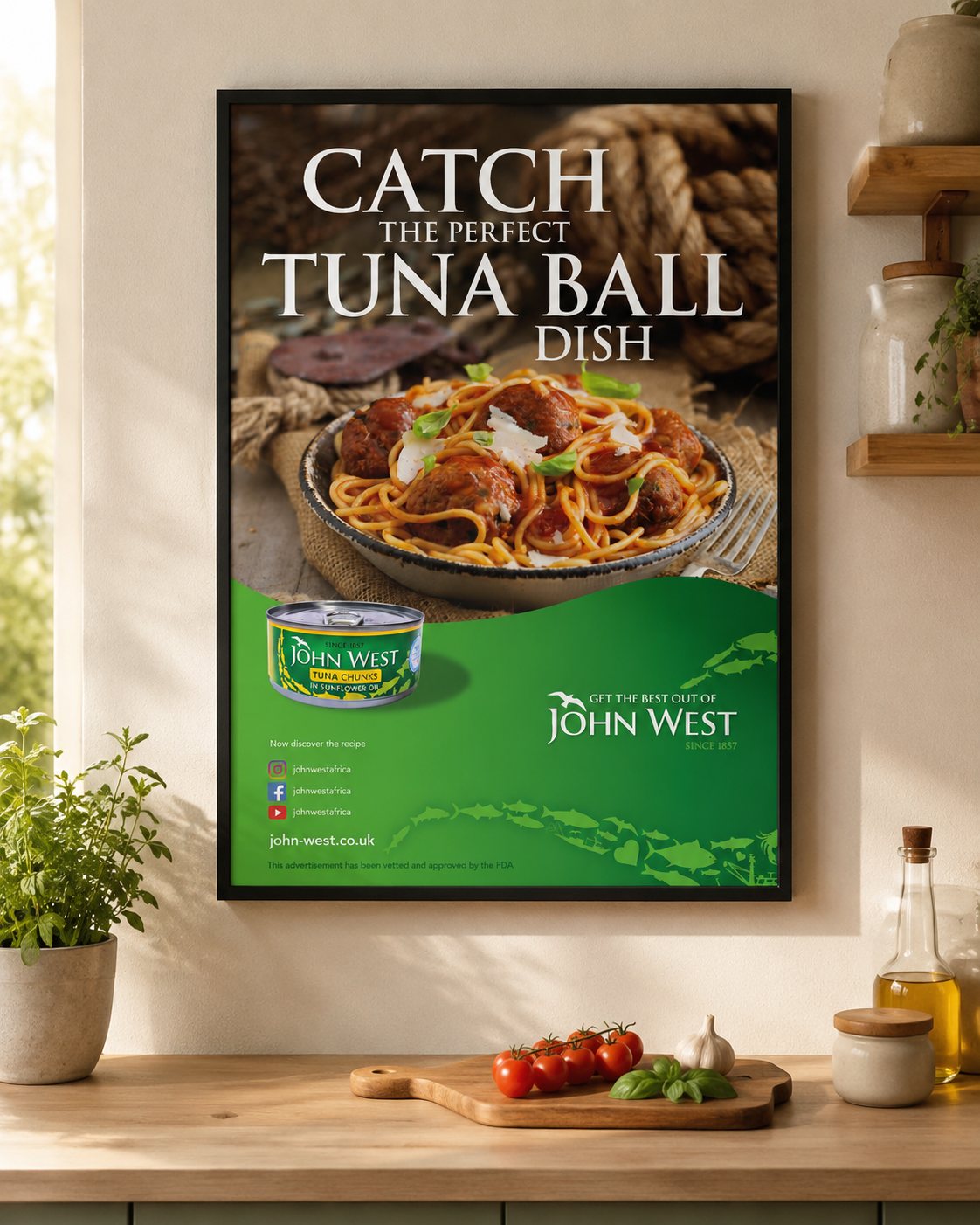
The campaign is delivered and rolling out across retail, print and out-of-home in the African market. Retail sell-through, campaign reach, recipe-page traffic and social growth on @johnwestafrica will be added here as data comes in.
What the work already gives John West is a shift in what the tin means — from a thing on a shelf to the first step of a meal worth making. A position that grows usage without ever touching the price.